Saturday, September 1, 2012

ArtTrail #8 - Archie Bray

“Your life is a piece of clay,
don't let anyone else mold it for you.”
 
 
There are always those who see things a bit differently; those who envision what the rest of us, perhaps, cannot see.
 
 
They take in all that is right before them and yet they are able to shift their focus to what lies beyond.
 
 
They clearly see the path - and the effort required - which leads from here to there.
 
Such a person was Archie Bray...

 
Born in Helena, Montana, in 1886, Archie Bray had virtually no say in what his life-long career would be. As a young man, he wanted to be a physician, but his father had other ideas and insisted that he be trained as a ceramic engineer. There are stories of hot and heavy arguments, but in the end that is what he did.

 
Gold had been discovered in Helena in 1864 and it soon became a boom town. Situated on the eastern edge of the Rockies, the prospering town was originally constructed of wood and canvas. For some, wealth needs to be flaunted and so brick and stone homes and business blocks became symbols of status. But among the many wooden structures frequent fires soon prompted the town fathers to require that only masonry buildings be built downtown. All this construction created a market for locally made brick.

 
Archie's father, Charles H. Bray, was born in England in 1864, the same year that gold was discovered at Helena. He served an apprenticeship with a British brickmaker before coming to the United States in 1880; in 1884, Charles, by then a skilled brickmaker, was hired to work at the Kessler Brick and Tile in Helena. As the business grew, Charles became the plant manager and progressively enlarged and updated the plant.


It's estimated that at least 90 percent of the brick of which Helena's buildings were constructed was made at these Brick Yards. Eventually merging with another brickmaking company, the plant became Western Clay Manufacturing Company.


Employing upwards of 50 workers, Western Clay produced fire, sidewalk, ornamental, paving, and pressed brick; culvert and sewer pipe; lawn vases and flower pots; clay tile; flue linings; and even hollow tile for grain silos. By 1918, production ran as high as ten million bricks and tiles annually.

 
In 1928, Charles Bray became the sole owner of Western Clay. Groomed to lead the enterprise in a new century, Archie had learned brickmaking at his father's knee. He combined this practical knowledge with the technical training he received in the Ohio State University ceramics engineering program, reputed to be the finest in the nation.


Upon his father's death in 1931, Archie became general manager and president of Western Clay. He continued his father's innovations, and under his direction Western Clay continued as Montana's preeminent brick producer, even at the peak of the Great Depression.


But after World War II, with the rise of new building technologies and materials, the demand for brick and other ceramic products begin to shrink.
 
 
 And Archie, a long-time patron of the arts,
had become obsessed with a vision.

 
Next door to the Western Clay plant, Archie would found a center for the ceramic arts with the support of friends who shared his vision and would help to carry it farther.
 
 
He finalized his plans for "the first branch of the Archie Bray Foundation," which he called Pottery, Inc.


In a letter to a friend, he described his vision for the Foundation:

"Somehow let's keep it all on the plane we dreamed — let's be practical too, let's keep it all in good fun, to roll along the whole idea built around —'A place to work for all who are seriously interested in any of the Ceramic Arts.'
 
 
To be high standards—to keep it nice—that it may always be a delight to turn to — to walk inside the Pottery and leave outside somewhere— outside the big gate —uptown —anywhere —the cares of every day.


Each time we walk in the door to walk into a place of art—of simple things not problems, good people, lovely people all tuned to the right spirit.
 
 
That somewhere thru it all will permeate a beautiful spirit... carrying on and forwarding the intentions, the aims and the life of the Foundation.
 
 
Can we do it?
 
 
What a joy it is to do it."


Today, the Archie Bray Foundation provides free access to some of the finest ceramic art found anywhere in the nation.


Located on the site of that 100+year old brick plant, the Bray grounds contain hundreds of ceramic artifacts and site-specific sculptures created by former resident artists.


You are welcome to explore the grounds anytime during daylight hours - there is no charge.


There is a rotating exhibition space and the Sales Gallery, where you can buy work by current and past resident artists.


During the summer the Bray's 3,500-square foot Warehouse Gallery, a converted brickyard building, features an exhibition of work by current resident artists.  


Solo exhibitions by departing resident artists take place at different times during the year, and additional Bray exhibitions are held at galleries throughout the country.


The permanent ceramics collection contains more than 1,000 pieces and continues to grow.


At age 65, Archie Bray finally did what he wanted...
 
 
"No man ever wetted clay and then left it,
as if there would be brick by chance and fortune."
~ Plutarch

 
For more information of the Archie Bray Foundation:

Tuesday, August 21, 2012

The Mountain - Sounds of Silence

When we stopped, the silence was absolute.

Walking, the only sounds were the soft footfalls of our boots on the path and the tap, tap of our walking sticks.


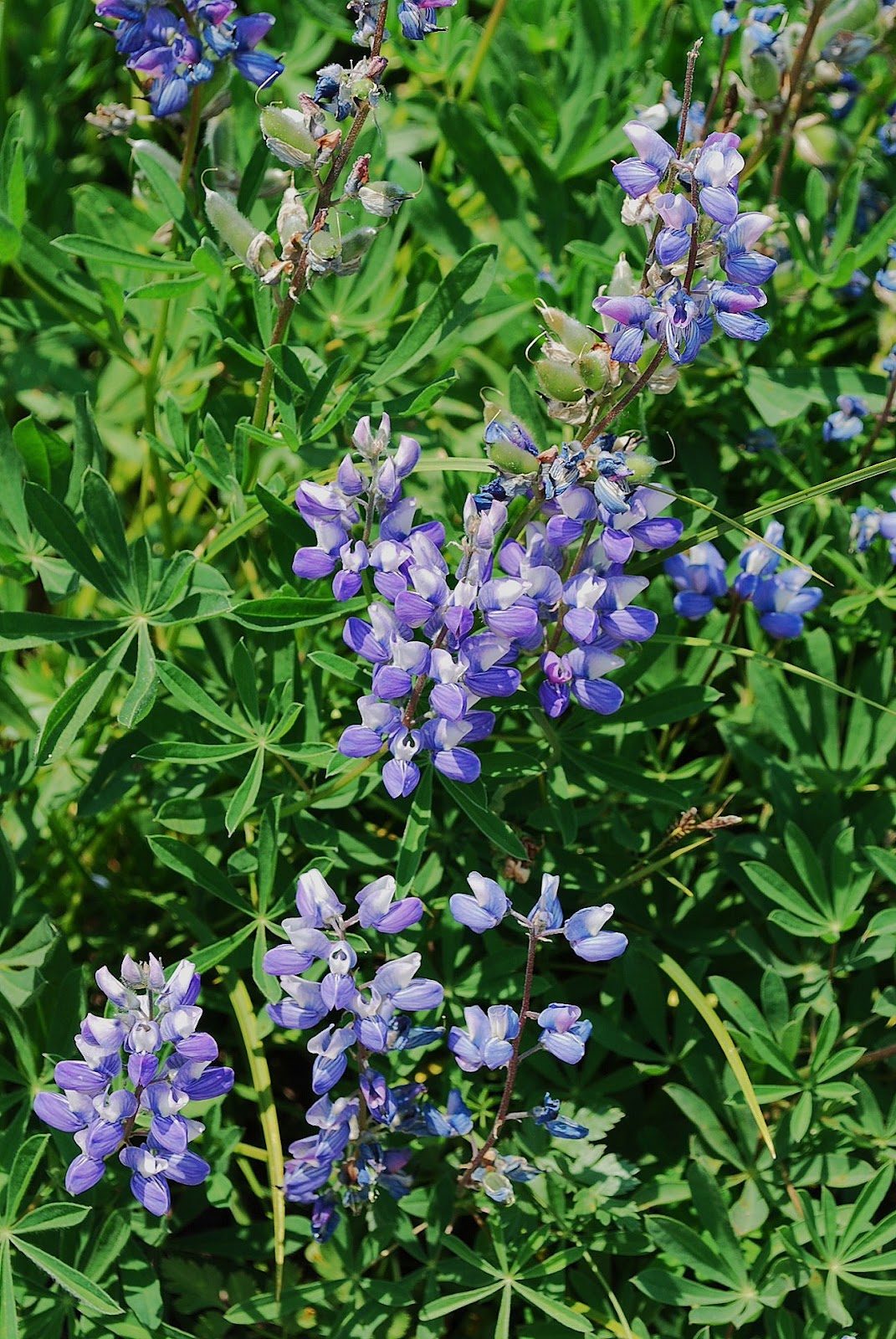
Covering the open, grassy hillside - both above and below us - swayed an array of wildflowers...
blue
yellow
red
pink
purple
 white

Up the hill, a few pointed firs and the stark, bleached remains of large dead trees scattered across the open landscape. These, reflecting a long-ago fire and many, many years of severe weather.

Far below, the White River flowed briskly downward, row after row of rugged peaks forming a receding backdrop.

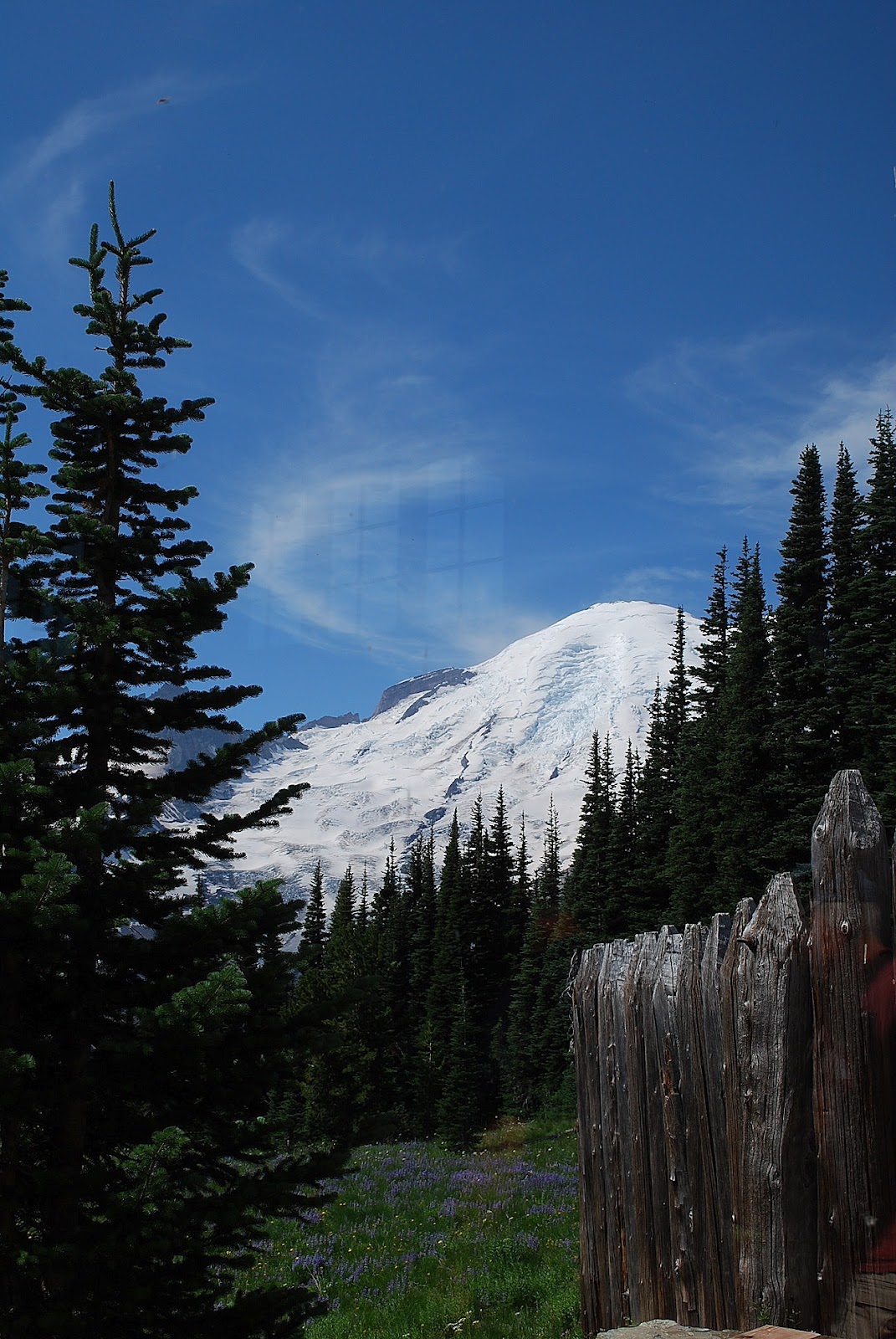
Behind us, and seemingly close enough to touch, the mighty Mount Rainier dominated all. Ascending to 14,410 feet above sea level, this huge monolith stands as an icon in the western Washington landscape.

An active volcano, it is the most glaciated peak in the contiguous U.S., and spawns six major rivers.

Subalpine wildflower meadows ring this icy volcano while ancient forest cloaks its lower slopes. It is a magnificent sight to behold and truly a work of art, but it has not always been such.

Formed through eons of change within the earth's crust, today's Rainier is the product of uplift, erosion, volcanic action, and time.


The early lava deposits are estimated to be more than 840,000 years old.


The summit is topped by two volcanic craters, each more than 1,000 feet in diameter. Geothermal heat from within keeps parts of both crater rims free of snow and ice and has formed the world's largest volcanic glacier cave network within the ice-filled craters, with nearly 2 miles of passages.


Mt. Rainier is considered one of the most dangerous volcanoes in the world. Because of its large amount of glacial ice, it could potentially produce massive lahars (volcanic mudflows) that would threaten the whole Puyallup River valley.

Northwest American Indians knew this mountain long before European explorers reached the Pacific.


Yakama, Puyallup, Nisqually, Cowlitz and Klickitat fished and hunted in the lowlands surrounding the mountain; hunting parties followed game up the slopes as the winter snows retreated. 


For generations they revered and knew it as Takhoma, Talol, Tahoma, Ta-co-bet and several other names.


Many of the names mean 'The mountain that was god', 'big mountain', 'snowy peak', 'mother of waters' or 'place where the waters begin.'


The city of Tacoma takes its name from one of the original native names for Rainier. Indeed, this ancient volcano can be seen throughout the greater Puget Sound area and on an exceptionally clear day is visible from Portland, Oregon to Victoria, British Columbia.

The outward appearance of this geologic wonder belies the tremendous power and fury that lie below. It is a reminder that constant change is a given, things are not always what they seem, and that appearances can be deceiving. In one way or another, all of us here live in the shadow of what is - in a superlative sense - The Mountain.

He said, "Go out and stand on the mountain before the LORD, for the LORD is about to pass by." Now there was a great wind, so strong that it was splitting mountains and breaking rocks in pieces before the LORD, but the LORD was not in the wind; and after the wind an earthquake, but the LORD was not in the earthquake; and after the earthquake a fire, but the LORD was not in the fire; and after the fire a sound of sheer silence.  
1 Kings 19:11-12

God is our refuge and strength,
a very present help in trouble.
Therefore we will not fear, though the
earth should change,
though the mountains shake in the
heart of the sea...
Psalm 46: 1-2


Memories of Rainier
August 2012

Friday, August 17, 2012

A Gift of Place - and Time

Time passes -
And with it
Nothing remains the same

From moment to moment
Day to day
Season to season
Year to year

And so enjoy
This meager gift
However insignificant

Gleaned from the woods
Of this place and time

Nothing is meant
To Last forever

So when you tire of it
Return it to the woods

For it is only a small
And humble token

Plucked from one
Moment in time
In this special place

It cannot be kept
Just as it is

For these dry bits
- And you -
Have already changed

And are moving on
Ever re-cycling
To another time
Another place -


Memories of Rainier
August 2012

Monday, August 6, 2012

When the Mouth is Busy...


A strange quietness has descended upon our back yard. The incessant cheeps of the swallow nestlings have stopped, a sure sign the last one has finally flown off. The quiet won't last long, for the yard is a-buzz with birds, insects, frogs, and the occasional coyote - all you have to do is listen.


A great variety of birds visit our feeders and over the years we have learned to identify most of them. Often, we don't even need to see them, as we know their calls. (Those who know me well know that I also often answer them!) These include the robin, chickadee, nuthatch, grosbeak, junco, Song and White-capped sparrow. Four types of woodpeckers live in the neighborhood and each of these - the Downy, Hairy, Pileated, and Northern Flicker - has its own unique call and drumming sound. The Pileated and Flicker, especially, announce their arrival with loud piercing cries. The sharp-shinned hawk, always on the lookout for a smaller bird meal, makes the high pitched sound common to hawks. Most of these we know by heart; others we need to look up year after year as we hear them less often or for one reason or another don't remember them. The bird community we live in is a very busy and noisy place!

At Family Camp this year, as other years, I asked the kids which animal in the woods is the loudest. As always, some children threw out their best guesses - lion, bear, dog, dinosaur... Some, either because they know me and have heard this question before (Caroline) or think it through carefully before answering, correctly shout "WE are" And how right they are - I don't know about volume, but in terms of pure constant chatter, we humans must surely win hands down. This is not necessarily a bad thing, but as I remind the children: "Our ears don't work as well when our mouth is busy..."
During my growing-up years, lots of visiting took place at our family dinner table. Dad spoke of business, politics and “the early days” when his family homesteaded in eastern Montana. Mom boldly gave her opinions on current events, related tales of her girlhood, and shared family news. I chattered on and on about whatever concerned me at the time. We felt free to speak, but were expected to listen in return. It was a lesson well-learned that has served me well.


In today's world, listening is more important than ever. With multi-tasking and electronic gadgetry now a given, how often do we give others our undivided attention? When someone is speaking and another is texting, plugged in to an iPod, typing on a laptop, answering a cell phone, or watching TV, what is actually being heard?


How often is there direct eye contact, quiet listening, and appropriate response as opposed to eyes directed elsewhere, mind on other things such as formulating one's own agenda that may have nothing to do with the current conversation?

The political climate is equally interesting and the same things apply. We each have our own view and opinion and in many cases feel compelled to share them. Again, this is not necessarily a bad thing, but how often do we actually listen to the other points of view? It's good to remember that hearing and LISTENING are not the same things...


My dear brothers, take note of this: Everyone should be quick to listen, slow to speak and slow to become angry, for man's anger does not bring about the righteous life that God desires.           James 1:19-20