Insightful and spiritual thoughts on everyday life related to the natural world, accompanied by photographs and artwork by the author.
Showing posts with label Christmas. Show all posts
Wednesday, December 26, 2018
What We Think We See
When venturing out these evenings, I am mesmerized by lights. Recently, long lines of cars filled the late autumn darkness with what seemed like a thousand glistening spider webs, awesome in their perfection. White, bluish, and red, they appeared as the frozen, steady glow of large individual sparks from a giant Fourth of July sparkler. Honestly, they’re hard to describe in their brilliant uniqueness. And it’s all because of my “new eyes.”
I distinctly remember the small room and hallway; it seemed like a whole new world to my left eye. No one told me that my vision had darkened, yellowed, and become blurry THAT much. Possibly they did, but I hadn’t believed them. I thought I could see just fine; could still read, if the light was bright enough; could still see traffic signs, if I got close enough. I’d put off the surgery for a few years, knowing it was just a matter of time before I’d really need it. The eye doctor told me that everyone, if they lived long enough, was likely to develop cataracts. Also, that the procedures had improved over time, there were choices as to what kind of lens to have put in, and that the success rate was high. I didn’t fear the surgery, but life was busy, and I just couldn’t be bothered. When I finally decided to go ahead, the results were more than I ever expected.
After the second surgery, my right eye took longer to heal and focus. During the first long week of recovery, the thought occurred to me that I might never see well through that eye again. There was always that slight possibility, of course, but I clung to the hope that all would end well. Fortunately, it did, and I was greatly surprised by the vision I now have: objects in clear focus both near and far; colors that look pleasingly different from before; overall, a brighter, whiter world. The new artificial lenses in my eyes allow me to see all this, BUT, bright lights shining directly at me (including the myriad stars in the night sky…) appear with these magnificent prisms of light radiating out of them.
Life is full of risks, and sometimes we have no option about taking them. Often, however, we can choose and must carefully weigh what’s at stake and if the risk is worth it. This year, during this season, I contemplate what vision really is and wonder: What if Mary had never believed the angel and had run away or Joseph had rejected her as she was, unborn child and all? What if the journey to Bethlehem had never been taken or the innkeeper had found room for two more? What if the shepherds had hidden in fear or the angels had been out on strike? What if the Magi had miscalculated the position of that one bright star or had done exactly as King Herod requested? What if we find we don’t really believe it at all? What is it we think we see and does or can that vision ever change?
My faith journey, as perhaps yours, has been long, meandering, and evolving. I’ve taken some wrong turns and come to some dead ends, hit some slick spots and lost control. I’ve had to stop to re-fuel or just take a rest, but I’ve kept going just the same. For I know that I’m not the main driver; the light continues to shine, directing and guiding my trek through this thing called life. Sometimes, it even appears as a giant sparkler, giving me joy in the darkest of nights.
This season, I wish the same for you.
When Jesus spoke again to the people, he said, "I am the light of the world. Whoever follows me will never walk in darkness, but will have the light of life." ~ John 8: 12
Labels:
Advent,
Aging,
Christmas,
Holidays,
Relationships
Wednesday, December 6, 2017
Windfall
Sometimes, when we are diligently searching but
looking in all the wrong places, the very thing we seek waits for us in plain
sight. Things we don’t even know we need…
Glad to go out on a mission, I sought the variety of greens that I
usually gather for holiday decorations. For cedar, I knew right where to go; the
revered old tree had some lower branches that needed pruning. It was easy,
using the long-handled loppers, to cut a couple of long branches off.
Once
those were down, I pruned off the smaller branches and made a stack on the lawn
to be retrieved later.
The Douglas firs were more difficult, as most of the lower branches were gone. Strolling
the edge of the pasture, I searched for any possibility when something caught my
eye.
Scattered about were many small branches blown down by a recent storm. I
gathered them up and stacked them into another pile.
There is a spot where western
white pine cones accumulate. It’s a bit of a mystery as there are none of these
trees nearby that I can see, and now there were more there than usual and some
unmistakable long-needled branches.
I made another pile. When I was finished, I
had more than enough fresh greens to do what I wanted and to share with friends
and neighbors.
After fifty years of marriage, my husband and I have reached a new plateau, of
sorts, in our relationship. Gone are the rounds of endless discussions trying
vainly to change a mind, the hurt feelings, the frustrations of not seeing
eye-to-eye on an issue. We have always agreed on most of the important things,
but have our differences, as everyone does. Perhaps the struggle to turn a
partner into someone other than who they really are is a hallmark of youth, but
it is one we’ve surrendered to time. We now truly value each other - “warts and
all” – and with that acceptance comes a tremendous peace.
A few years ago,
through a series of volunteer projects, I gradually became acquainted with a
couple of remarkable women. One is a chatterbox - innately honest and a warm, caring
person with a heart as big as all outdoors and a fierce enthusiasm to
throw herself wholeheartedly into any endeavor she is a part of. The other appears quiet and reserved and can
size up a situation quickly, has an eye for detail, and a determined stubbornness
when it comes to preserving the environment and all creatures within it.
One is
a non-practicing Catholic; the other has probing questions on all things
involving faith. We get together often, discuss anything, and respect each
other’s opinions. Beyond a doubt, I have become better informed, stronger in my
convictions, and more willing to act for causes I believe in because of their willingness to question and share. Ours has become a treasured
friendship.
We had been without a dog for fifteen years when a series of
circumstances led to our adopting our little rescue terrier, Scruffy. We wanted to find a dog locally, but we found him on the internet. We wanted to travel a short distance, yet we drove to another state to see him. We wanted an uncomplicated process - we visited him at an incarceration facility for young men, but still could not bring him home because the rescue group needed to visit and approve our home. Lord
knows he has his issues, unique behaviors, and odd little personality quirks,
but he has added a certain energy, challenge, and spirit to our aging lives. He
makes us LAUGH harder than we have in years, gets us out of the house daily, and gives us a reason to look forward to every day. And we wonder – just who saved
whom?
All of this is windfall - unexpected, unearned, a sudden gain or advantage. In one
form or another it comes to all of us, but we need to open our eyes to see and recognize it. And when you do, acknowledge, accept, and value it –
trust where it comes from and that there will be more to come.
Wednesday, December 31, 2014
Christmas Passed
The frenzy is
over - or nearly so
At least for
this year
Its remnants
scattered here
Like the
trodden, sodden confetti
Did we stand
With hand upon
heart
Respect and awe
written upon our faces
Forever in love
with the child
on the float of hay
With wizened,
weary eye
Watching him grow
smaller and smaller
Phewww!
Are we glad
that's over for another year?
Thinking:
Next year it
will be better
We'll start
earlier,
Be better
organized,
Cut back, spend
less,
A New Year
beckons
What's done is
done
What's gone is
gone
Unless, of
course, we join the parade
Hop on the float
- the one with the child
And ride with Him
the whole, long, way
Trailing
snippets to salvage,
and odd bits of change
Leaving behind
all the crumbs,
the dregs of excess,
Tossing,
instead, to the gathering crowd
Those tidbits of
trust
Handfuls of
harmony
Buckets of bright
hope
As we dare to
have faith
For God is not a
God of disorder but of peace.
Thursday, December 25, 2014
Minding Sheep
Looking back, we were pretty ignorant about the whole thing. But we had
an old farm house, a small pasture with good grass, readily available
irrigation, and we had read that sheep were easy to raise. We drove to a local
farmers' auction, dead-set on getting some lambs. Surprisingly, we took the bid
on a nice little flock of three, loaded them into the back of our small pickup,
and home we came. Unloading them into the field, the fun began - those little
lambs, in a strange place and separated from others of their kind, began a
loud, plaintive bleating that we were sure could be heard in the next county; it
went on for hours. Who knew???
That first tentative step into raising sheep taught us much, and when we
moved from Idaho to Washington, we tried again - in fact, we tried several
times. Each time, we managed to raise them to butchering size and were
satisfied that we got a big pile of wool to spin and a good batch of meat for
the freezer. This is not to say we were highly-knowledgeable sheep farmers. Far
from it!
In those days, shepherds knew their sheep. Unless he could afford to delegate the work to his relatives or hirelings, the sheep owner tended his flocks himself. If others watched them, they well may have been neglected or abused, but the owner had a personal interest in the well-being of the animals and if he herded them they usually had good care.
Either way, the main job of the shepherd was to see that the sheep found plenty to eat and drink. The flocks are not fed in pens or folds, but depended on foraging both summer and winter. Sheep are fairly helpless on their own and do not possess the instinct of many other animals for finding their way, so they need to be led to good grazing and watered at least once a day. This was an easy matter on mountain tops with melting snows or if there were springs or streams, but in other places they depended on deep wells. Often the nearest water was hours away. Sometimes it could be found by digging shallow wells and the shepherd would carry a container from which the sheep could drink.
The usual time for watering was at noon. After drinking, the animals huddled together in the shade of a rock while the shepherd slept. At the first sound of his call, usually a peculiar guttural sound, the flocks followed him to new feeding-grounds. They never mistook their own master's voice, even if the sheep intermingled and two shepherds called their flocks at the same time.
In the mountains, flocks were gathered at night into
folds, which were caves or enclosures of rough stones. Where there was no
danger the sheep huddled together in the open until daylight, while the
shepherd watched over them. Lambs were often born far off on a mountain side.
The shepherd guarded the mother during her labor, picked up the newborn and
carried it to the fold. He might carry it in his arms or in the loose folds of
his coat for a few days until it grew strong.
So very long ago - I often wish I had been there...
And
there were shepherds living out in the fields nearby, keeping watch over their
flocks by night. An angel of the lord appeared to them, and the glory of the
Lord shone around them, and they were terrified. But the angel said to them,
"Do not be afraid, I bring you good news of great joy that will be for all
people. Today in the town of David a Savior has been born to you; he is Christ
the Lord. This will be a sign to you: You will find a baby wrapped in cloths
and lying in a manger."...The shepherds said to one another, "Let's
go to Bethlehem and see this thing that has happened, which the Lord has told
us about." So they hurried off and found Mary and Joseph, and the baby,
who was lying in the manger. When they had seen him, they spread the word
concerning what had been told them about this child, and all who heard it were
amazed at what the shepherds told them...The shepherds returned, glorifying and
praising God for all the things they had heard and seen, which were just as
they had been told. Luke
2:10-12, 15-18, 20
Sunday, December 21, 2014
Empty Nesters
Empty nest n. - A
home or a family where the children have grown up and left home.
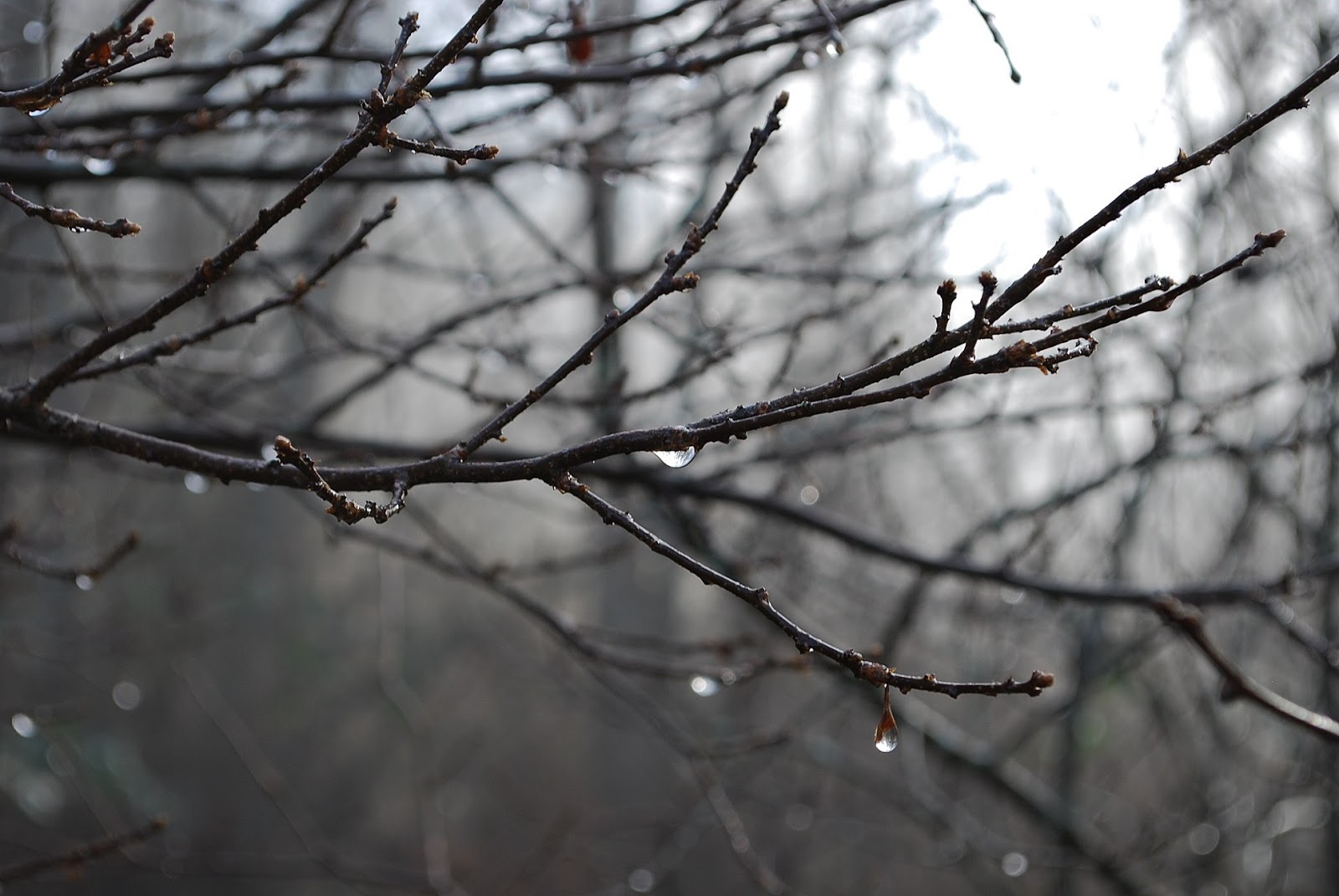
Even on the bleakest days of this winter, I notice it outside our bedroom window - seek it out, actually. Forlorn and droopy though it might appear, especially with our dark and soggy northwest weather, it is a good reminder for me of what does, and doesn't need to be.
The bird that made it is long gone, basking in a warmer clime. But it was a sly one, quietly flitting in and out of the leaf cover to build its masterpiece. Summer was half over before we ever noticed it, although it is nearly at eye level from our second story bedroom window which I look out of every single day of the year. That robin carefully and painstakingly constructed this nest of twigs, mud, grass, moss and feathers, before laying its eggs and successfully raising its young. This was one nest that we couldn't really observe - it was just too well-hidden, wedged into the fork of several branches and obscured by thick leaves. I saw enough, however, to know that the young did hatch, were regularly fed and protected, and did eventually leave the nest for good. And in the life of the adult bird, that was it - having no further use for the nest, she also left in behind, never to return to or use it again. Perhaps there is a lesson here for us...
Most birds build and use a nest for one reason only - as a safe, protected place in which to raise their young. Some kinds of birds return to the same nest year after year, repairing and re-arranging it as necessary; many insist on building a new nest each year. Either way, very seldom do the adults stick around to use the nest themselves after their young have left it; it has served its purpose. And consider what those adults do when their young have finally learned to fend for themselves and are gone for good. They go on with their bird lives, doing whatever it is that birds of their kind do. I seriously doubt that they suffer long, if at all, from "empty nest syndrome".
I have always been a "nester". I attribute that, at least in part, to the fact that I was raised in a safe and cozy home. Although my sisters were teenagers when we moved in, I was a toddler and it was the only childhood home I ever knew. I lived there until I was married; my parents lived there until their deaths.
My parents did all of the work - carpentry, repairing, painting, decorating - themselves on that old house and so I thought that everyone did that. Because we lived next to our family greenhouse and floral business, the house became the center of our existence. In Our-Speak, it was always "the store" and "the house". To me, the house was a comfortable refuge - a warm, inviting place that was often a bit messy and disorganized, but never dirty nor uncared for. The coffee was always on, an extra plate (and perhaps a thinner soup...) was always available to visitors, a listening ear heard many a lament or heartache, and family mourning or celebration took place there. In the greatest sense of the word, it was always HOME for me. And it continued to function in these ways long after I had left it.
Since our marriage, my husband and I have lived in two apartments and five different houses and each of those was a home for us at the time. We followed suit with my parents by remodeling, repairing, and decorating each one to suit our needs. Each time we moved, I hated to leave the house, but quickly adapted to the new place and set about nesting again.
Some lessons are learned the hard way and one of the biggest and best for me concerned a house. After spending four years in Colorado, where we poured blood, sweat, and tears into an old log house, we moved with my husband's work to Texas. I was heartbroken to leave, although I did adapt rather quickly to a much nicer house in the new location. A year or two after we'd left, my husband traveled on business back to our town in Colorado and I went along to visit old friends there. One of our previous neighbors insisted that she take me to visit our old house, something I truly dreaded doing because I had loved it so. The current owners were quite amicable and warmly invited us in to take the "royal tour" of our old home. It was then I realized that this house meant nothing to me anymore - absolutely NOTHING. Oh yes, the memories of our time spent there were strong (still are) - and mostly happy - but that was then and this was now. Quite simply - it was no longer our house and, therefore, no longer our home. It is the people and the experiences that make a house a home.
We've lived in our present house longer than in all of the others put together. Again, we have poured time, talent, and money into it and in the process have made quite a nest for ourselves.
We were married for some time before bringing a child into the family, but quickly adapted - and adapted the house as well - to having a young one around.
When the turbulent teen years hit, our son was in and out, out and in, and then finally out for good. Thus, we found ourselves being "empty nesters" well before most people probably do. I would be lying if I said this was not painful - for what wonderful, warm, happy memories children bring into our homes and lives. Nevertheless, even under the best of circumstances, children grow up and move out. Who of us would have it otherwise?
Today, our son and grandchildren are always welcome in our home and they do visit. But we know that they have their own lives to live and understand when the visits are infrequent.
Life does indeed go on - we have friends who come by,
we occasionally have various kinds of meetings here,
we keep in touch with relatives and friends who live some distance away and welcome their visits when they can make them.
We consider any visit to our home a special occasion and therefore make the coffee, offer the food (and sometimes a bed...) and spend the time visiting whenever possible. We consider it a privilege to be able to do so.
Mostly, we spend time with each other or alone doing the things that we enjoy doing here at home. Because it is our home, we are the ones to enjoy it, but we realize that the house is just a building. It is what happens here - and who is present - that makes it a real home.
Recently, it was tree-trimming, cookie-baking, and candy-making with the grandkids.
Next week it will be Christmas Eve and Day spent with them, our son, and my sister, in our crazy, some-old-some-new ways with mystery packages, home-made goodies, mixed generations, good food, recliner naps, rap music, old time carols, and maybe a game or two.
We welcome all the hubbub and when it is over, we will welcome returning to the peace and quiet once again.
And so, as this season of darkness continues to progress, inching ever closer to a new season, I'll continue to watch the deserted nest from our window. Unlike the birds, most of us DO need a place to call home. One way or another, we shape our own nests as a place of refuge and comfort. It does not matter so much the shape or size of the house, only that it suits our particular needs and offers some respite from the busy-ness of the world. Many of us feather our nests so that we may raise children and, eventually, these children do fly away.
But life DOESN'T need to become less engaging when the children leave. There are a great many ways and reasons to feather one's nest...
Even on the bleakest days of this winter, I notice it outside our bedroom window - seek it out, actually. Forlorn and droopy though it might appear, especially with our dark and soggy northwest weather, it is a good reminder for me of what does, and doesn't need to be.
The bird that made it is long gone, basking in a warmer clime. But it was a sly one, quietly flitting in and out of the leaf cover to build its masterpiece. Summer was half over before we ever noticed it, although it is nearly at eye level from our second story bedroom window which I look out of every single day of the year. That robin carefully and painstakingly constructed this nest of twigs, mud, grass, moss and feathers, before laying its eggs and successfully raising its young. This was one nest that we couldn't really observe - it was just too well-hidden, wedged into the fork of several branches and obscured by thick leaves. I saw enough, however, to know that the young did hatch, were regularly fed and protected, and did eventually leave the nest for good. And in the life of the adult bird, that was it - having no further use for the nest, she also left in behind, never to return to or use it again. Perhaps there is a lesson here for us...
Most birds build and use a nest for one reason only - as a safe, protected place in which to raise their young. Some kinds of birds return to the same nest year after year, repairing and re-arranging it as necessary; many insist on building a new nest each year. Either way, very seldom do the adults stick around to use the nest themselves after their young have left it; it has served its purpose. And consider what those adults do when their young have finally learned to fend for themselves and are gone for good. They go on with their bird lives, doing whatever it is that birds of their kind do. I seriously doubt that they suffer long, if at all, from "empty nest syndrome".
I have always been a "nester". I attribute that, at least in part, to the fact that I was raised in a safe and cozy home. Although my sisters were teenagers when we moved in, I was a toddler and it was the only childhood home I ever knew. I lived there until I was married; my parents lived there until their deaths.
My parents did all of the work - carpentry, repairing, painting, decorating - themselves on that old house and so I thought that everyone did that. Because we lived next to our family greenhouse and floral business, the house became the center of our existence. In Our-Speak, it was always "the store" and "the house". To me, the house was a comfortable refuge - a warm, inviting place that was often a bit messy and disorganized, but never dirty nor uncared for. The coffee was always on, an extra plate (and perhaps a thinner soup...) was always available to visitors, a listening ear heard many a lament or heartache, and family mourning or celebration took place there. In the greatest sense of the word, it was always HOME for me. And it continued to function in these ways long after I had left it.
Since our marriage, my husband and I have lived in two apartments and five different houses and each of those was a home for us at the time. We followed suit with my parents by remodeling, repairing, and decorating each one to suit our needs. Each time we moved, I hated to leave the house, but quickly adapted to the new place and set about nesting again.
Some lessons are learned the hard way and one of the biggest and best for me concerned a house. After spending four years in Colorado, where we poured blood, sweat, and tears into an old log house, we moved with my husband's work to Texas. I was heartbroken to leave, although I did adapt rather quickly to a much nicer house in the new location. A year or two after we'd left, my husband traveled on business back to our town in Colorado and I went along to visit old friends there. One of our previous neighbors insisted that she take me to visit our old house, something I truly dreaded doing because I had loved it so. The current owners were quite amicable and warmly invited us in to take the "royal tour" of our old home. It was then I realized that this house meant nothing to me anymore - absolutely NOTHING. Oh yes, the memories of our time spent there were strong (still are) - and mostly happy - but that was then and this was now. Quite simply - it was no longer our house and, therefore, no longer our home. It is the people and the experiences that make a house a home.
We've lived in our present house longer than in all of the others put together. Again, we have poured time, talent, and money into it and in the process have made quite a nest for ourselves.
We were married for some time before bringing a child into the family, but quickly adapted - and adapted the house as well - to having a young one around.
When the turbulent teen years hit, our son was in and out, out and in, and then finally out for good. Thus, we found ourselves being "empty nesters" well before most people probably do. I would be lying if I said this was not painful - for what wonderful, warm, happy memories children bring into our homes and lives. Nevertheless, even under the best of circumstances, children grow up and move out. Who of us would have it otherwise?
Today, our son and grandchildren are always welcome in our home and they do visit. But we know that they have their own lives to live and understand when the visits are infrequent.
Life does indeed go on - we have friends who come by,
we keep in touch with relatives and friends who live some distance away and welcome their visits when they can make them.
We consider any visit to our home a special occasion and therefore make the coffee, offer the food (and sometimes a bed...) and spend the time visiting whenever possible. We consider it a privilege to be able to do so.
Mostly, we spend time with each other or alone doing the things that we enjoy doing here at home. Because it is our home, we are the ones to enjoy it, but we realize that the house is just a building. It is what happens here - and who is present - that makes it a real home.
Recently, it was tree-trimming, cookie-baking, and candy-making with the grandkids.
Next week it will be Christmas Eve and Day spent with them, our son, and my sister, in our crazy, some-old-some-new ways with mystery packages, home-made goodies, mixed generations, good food, recliner naps, rap music, old time carols, and maybe a game or two.
We welcome all the hubbub and when it is over, we will welcome returning to the peace and quiet once again.
And so, as this season of darkness continues to progress, inching ever closer to a new season, I'll continue to watch the deserted nest from our window. Unlike the birds, most of us DO need a place to call home. One way or another, we shape our own nests as a place of refuge and comfort. It does not matter so much the shape or size of the house, only that it suits our particular needs and offers some respite from the busy-ness of the world. Many of us feather our nests so that we may raise children and, eventually, these children do fly away.
Ours is never empty.
For more holiday posts
click below:
Holidays: 1. Prepare Yourself
Holidays: 2. Figure It Out
Holidays: 3. Forge Ahead
Holidays: 4. Celebrate!
I Don't Do Angels
Christmas Is
Whose Holiday Stamps?
Santa's Angel
Berries and Thorns
O Tannenbaum
Of Things Not Seen
The Shepherds Wore Tennis Shoes
Following Stars
The Glow of Advent
For more holiday posts
click below:
Holidays: 1. Prepare Yourself
Holidays: 2. Figure It Out
Holidays: 3. Forge Ahead
Holidays: 4. Celebrate!
I Don't Do Angels
Christmas Is
Whose Holiday Stamps?
Santa's Angel
Berries and Thorns
O Tannenbaum
Of Things Not Seen
The Shepherds Wore Tennis Shoes
Following Stars
The Glow of Advent
Labels:
Aging,
Christmas,
December,
Family,
Hope,
Relationships,
Washington,
Winter
Subscribe to:
Posts (Atom)


.jpg)
.jpg)
.jpg)
.jpg)
.jpg)
.jpg)
.jpg)
.jpg)
.jpg)


0009.jpg)

.jpg)


.jpg)
.jpg)
.jpg)

.jpg)